Explore divorce mediation as a peaceful, cost-effective alternative to traditional litigation in Orange County, emphasizing faster resolutions and reduced emotional strain.
Share:

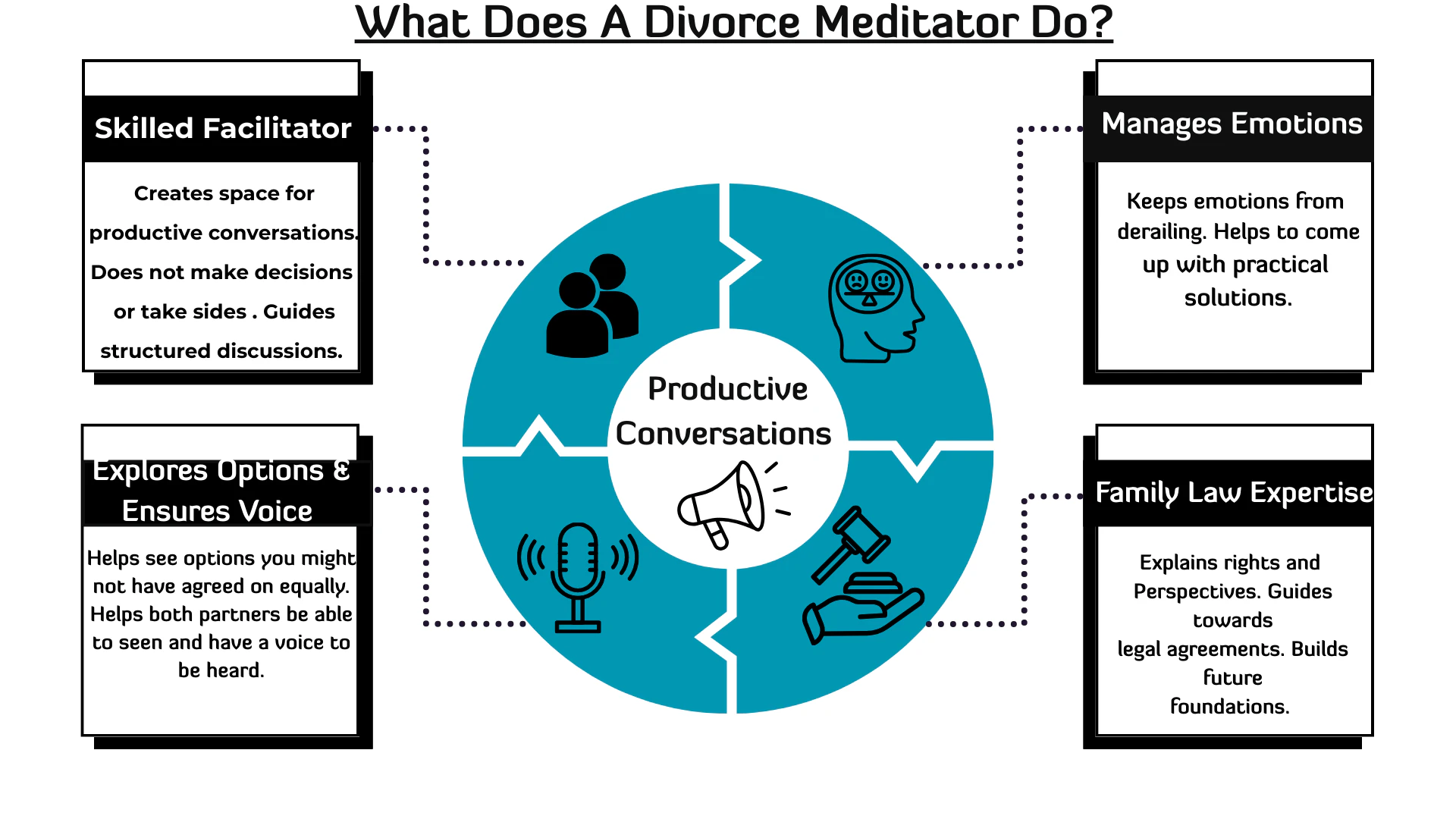
Divorce mediation is a collaborative process where you and your spouse work with a neutral third-party mediator to resolve your differences and reach mutually acceptable agreements. Unlike traditional litigation where a judge makes decisions for you, mediation puts you in control of the outcome.
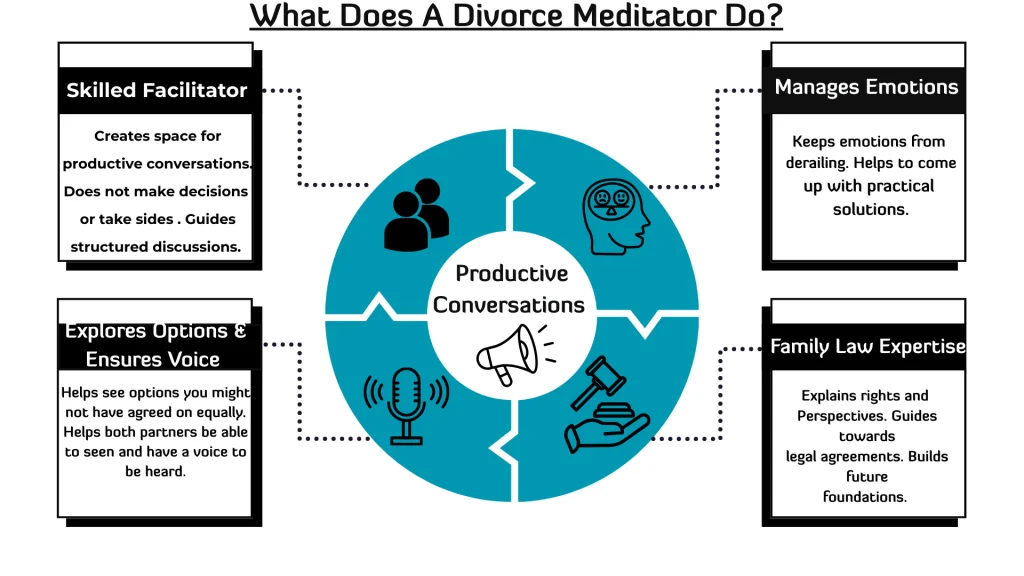
The process is straightforward. You’ll meet with a trained mediator in a private, confidential setting where both parties can discuss their concerns openly. The mediator doesn’t take sides or make decisions—instead, we facilitate productive conversations and help you explore solutions that work for your unique situation.
This approach allows you to address all aspects of your divorce, from child custody and support to property division and spousal support, in a collaborative environment focused on finding common ground rather than winning battles.
The financial impact of your divorce approach can be staggering. While divorce mediation costs between $5,000 and $15,000 on average, litigated divorces in California can cost between $15,000 and $50,000, or potentially much more if the case is significantly complex and the parties have difficulty coming to agreements.
On average, if a couple chooses to litigate it can take up to 19 months and they can spend roughly $15,000 to $30,000 to get divorced according to Forbes magazine. In our experience, by using a mediator in California, parties can obtain a final dissolution judgment in as little as 6 months – depending upon the backlog at the court at a cost of possibly $2,000 to $5,000 total.
These cost savings aren’t just about attorney fees. When you choose mediation, you’re typically sharing the cost of one mediator instead of each party hiring separate attorneys. You avoid expensive court fees, lengthy discovery processes, and the unpredictable costs that come with contested litigation.
For families in Orange County, where the median household income is high but so is the cost of living, these savings can make a significant difference in your post-divorce financial stability. You’re investing in resolution, not conflict.
The time savings are equally important. While litigation can stretch on for months or even years due to court schedules and procedural delays, mediation allows you to work at your own pace and schedule sessions at mutually convenient times.
The financial impact of your divorce approach can be staggering. While divorce mediation costs between $5,000 and $15,000 on average, litigated divorces in California can cost between $15,000 and $50,000, or potentially much more if the case is significantly complex and the parties have difficulty coming to agreements.
On average, if a couple chooses to litigate it can take up to 19 months and they can spend roughly $15,000 to $30,000 to get divorced according to Forbes magazine. In our experience, by using a mediator in California, parties can obtain a final dissolution judgment in as little as 6 months – depending upon the backlog at the court at a cost of possibly $2,000 to $5,000 total.
These cost savings aren’t just about attorney fees. When you choose mediation, you’re typically sharing the cost of one mediator instead of each party hiring separate attorneys. You avoid expensive court fees, lengthy discovery processes, and the unpredictable costs that come with contested litigation.
For families in Orange County, where the median household income is high but so is the cost of living, these savings can make a significant difference in your post-divorce financial stability. You’re investing in resolution, not conflict.
The time savings are equally important. While litigation can stretch on for months or even years due to court schedules and procedural delays, mediation allows you to work at your own pace and schedule sessions at mutually convenient times.
Your children’s wellbeing is probably your top priority, and mediation offers significant advantages for protecting them during this difficult time. Children can be profoundly affected by their parents’ high conflict divorce, often experiencing anxiety, stress, and emotional distress. Mediation provides a less adversarial environment, helping to shield children from the negative impact of contentious disputes. By focusing on cooperation and effective communication, mediation allows parents to work together to create parenting plans that prioritize their children’s best interests.
The collaborative approach of mediation sets the foundation for successful co-parenting relationships that will benefit your children long after the divorce is finalized. When parents can work together respectfully during the divorce process, it demonstrates to children that their needs remain the priority.
The evidence strongly supports mediation as the better choice for children. Research presented at the Australian Institute of Family Studies indicates that divorcing couples who successfully mediate divorces are more likely to be satisfied with the outcomes of decrees and court orders, perceive the results as fair, experience greater spouse compliance with orders, feel confident in resolving future issues without further litigation, and benefit from generous visitation arrangements.
Research indicates that parental divorce/separation is associated with an increased risk of child and adolescent adjustment difficulties. These can manifest in various ways, including academic challenges such as lower grades and dropout rates, behavioral issues like conduct problems and substance use, and emotional struggles such as depressed mood.
However, mediation helps mitigate these risks. Mediation has the potential to positively impact children in various ways. By reducing conflict, enhancing parenting skills, and promoting active involvement from both parents, it creates a supportive environment for children to thrive.
The process teaches parents communication skills they’ll use for years to come. In mediation sessions, parents learn how to talk to each other without arguing. This means less fighting at home, which is great for kids. They don’t have to see or hear their parents yell at each other. This makes divorce less scary for children. When parents learn to communicate better through the process, kids feel safer.
Children benefit from seeing their parents work together to solve problems rather than battle against each other. This collaborative model becomes the foundation for future co-parenting decisions about school, activities, medical care, and other important aspects of their lives.

In California, creating a thoughtful parenting plan is essential for your divorce. Through mediation, you and your co-parent can craft customized support arrangements that truly reflect your family’s needs—going beyond basic guidelines to create solutions that work for everyone, especially your children.
The mediation process allows you to address the unique aspects of your family situation. Maybe one parent travels frequently for work, or your children have special needs that require specific arrangements. For most families, we begin by discussing where children will spend nights, weekends, and holidays, then move to how you’ll make important decisions about education, religion, and medical care. Since there’s little guidance on creating effective parenting plans, an experienced mediator provides invaluable support through this process.
Unlike court-imposed custody arrangements that follow standard formulas, mediated parenting plans can be tailored to your family’s specific needs and circumstances. You might create flexible arrangements that adapt to your children’s changing needs as they grow, or develop creative solutions for handling holidays and special occasions.
The collaborative nature of creating these plans also means both parents have input and buy-in, leading to better compliance and fewer future conflicts. A skilled mediator helps you settle your divorce peacefully with your children’s best interests at heart. Remember, regardless of your feelings toward your soon-to-be-ex, you’ll be co-parents for life.
This long-term perspective is crucial. The communication skills and collaborative problem-solving approach you develop during mediation will serve your family well for years to come, through school decisions, activity choices, and all the other parenting decisions you’ll need to make together.
Divorce mediation offers Orange County families a path forward that prioritizes cooperation over conflict, children’s wellbeing over winning, and practical solutions over prolonged battles. With mediation having over a 70% success rate nationwide, you can feel confident that this collaborative approach works for families like yours.
The choice between mediation and litigation isn’t just about saving money—though the cost savings are significant. It’s about choosing a process that aligns with your values and protects what matters most to your family. When you choose mediation, you’re choosing to maintain control over your family’s future rather than leaving those crucial decisions to a stranger in a courtroom.
If you’re ready to explore how divorce mediation can help your family navigate this transition with dignity and respect, we’re here to guide you through the process with the expertise and compassion you deserve.

Article details:
Share:
Continue learning: